Search This Blog

Showing posts with label reporter-Peter Melzer. Show all posts

Friday, August 24, 2012

Best FREE Travel Tips Thailand

Thailand offers 5 Key Tourism Regions
North - Authentic, Cool climate and mountains - (tranquil)


North East - Authentic, Hot climate, The crop (farming)

Central - Dynamic, Multi cultural - (the Hub)

Central East - Diverse; Beaches, Golfmania, Nightlife Mania (wow!)

South - Beaches of splender, (civil unrest deep south)

Thanks for your Feedback
We acknowledge the valuable feedback from our readers and Travellers. The feedback has allowed us to publish Rating factors for Locations.

We have applied key values for Tourists and rated them.  The key values are:-

Beginners - Westernised - easier for you - cost of convenience

Authentic - Less Commercial/cost, more "perceived" risk..
Family - Activities
Singles - Entertainment style Nightlife, Bands, Nightclubs

We applied a rating from 1 (lowest) to 10 (best)

To see more click here

Saturday, October 2, 2010

Medical Tourism Thailand - it's special

Medical Tourism in Thailand

The three major hubs are Singapore, India and Thailand.  In 2006, Singapore claimed 374,000 medical tourists while India brought in over six hundred thousand BUT Thailand is so the SUCCESS STORY.

Enjoy success, contact a Skal International member, the worlds largest travel group. More about Skal in "links" below".

Thailand is a world leader in the medical tourism industry and the country’s private hospitals and clinics are able to perform all kinds of surgeries from heart procedures to hip and joint replacements. Bangkok has several hospitals that are used to receiving foreign patients, and the number of hospitals means that it’s easy to get a second opinion and find a doctor you’re comfortable with
Reporter: Peter

Thailand is the undisputed heavyweight of the industry, drawing over 1.2 million medical tourists.  Thailand’s two largest medical tourism targets are the Bumrungrad and Bangkok Hospitals, which annually treat 400,000 and 150,000 foreign patients, respectively. 


Thailand Cosmetic surgery
The prices for elective surgery can be a fraction of what they would be in the west, with the quality level being consistently high. While common procedures such as face lifts, tummy tucks and breast augmentation are widely available, Thailand is also a world specialist in sex reassignment surgery. Procedures of this nature include almost everything .. I’d tell you more but then you’ll know what I did last summer !.


Thailand Dental tourism
Thailand is known for its masterful dentists. Many Westerners make up to three trips over the period of a year to receive extended dental surgery, and still come out saving significant amounts of money. The dental equipment used in Thailand is on par with some of the best in the world, and the dentists are very well trained. Procedures available include crowns, dentures, laser teeth whitening and bridges.


Thailand Alternative medicine
The Thais have long been practicing alternative medicine and many practitioners using herbal medicines and holistic approaches are available. This sector is beginning to attract foreign attention, particularly the country’s wellness retreats, yoga workshops and chiropractic treatments.


Thailand Health spas
The spa industry is big business in Thailand. Thais and foreigners alike take advantage of the many spas in the cities, where saunas, steam baths and every kind of massage are available for much less than the going rate in the west. Spas here are well suited to catering to international tourists and cost-saving packages are available at every establishment.


Bangkok Medical Tourism
Bangkok is Asia’s leading medical tourism destinations, earning an international reputation for excellence. Their Western-trained doctors and hospitals offer amenities and service to rival those in Western countries.


All of Bangkok’s private hospitals feature English speaking doctors and nurses who are accustomed to dealing with medical tourists. Equipment is state-of-the-art, as are the procedures and care that they offer.


Bumrungrad is one of Bangkok’s leading hospitals . Other hospitals in Bangkok offering excellent facilities and procedures for a fraction of the price include Bangkok International Hospital, BNH Hospital.

what we offer you:-
the opportunity...DO IT YOURSELF; save money, enjoy a budget, timeframe and a holiday...  
We don't sell you anything, we don't need too!
We promote good ideas and let you decide for yourself
the fact is everyone that comes is overwhelmed by the genuine care and service.


If you think it was a good thing then offer our site to your friends

 Links
Aussie Medical Tours - Bangkok - D.I.Y. our join our monthly tours Bangkok Medical
We show costs and everything we neededto know before we used the service.  Welcome to call us at AusWaThai for obligation free chat at AusWaThai. 

Skal International Bangkok - Worlds Largest friends travel Association


Health check - see the brochure below

Wednesday, July 28, 2010

How to be an Expat in Thailand

OK, try riding your motorbike, one hand holding an umbrella, the other hand sending an sms, steering with your knee and then suddenly dropping everything to offer a quick wai to a roadside spirit house before crossing four lanes of traffic to make a sudden U-turn because you forgot to pick up your girlfriend and she's going to wear a sulk longer than it takes to explain the concept of 'money back guarantee' to a Thai businessman.


by Peter Melzer - we have published an article created by auswathai forum user

Remember.... T.I.T. This is Thailand

For sure, Thailand can be quite strange and newcomers find themselves conducting all sorts of cultural charades and going berserk trying to figure out some of the crazy habits of the locals.

Don't ask us why they eat ice-cream sandwiches, or drink their beer with ice. Never sleep with your head facing west, duck when you walk in front of people, paste yourself in skin whitening cream… there are all sorts of strange beliefs here.


Seal of Bangkok.Luckily Bangkok allows you to keep a foot both in the Eastern and Western world. An increasing number of Thais now speak English, especially in the services industry, and there are all sorts of clubs, groups and activities that suit ex-pats. Of course, you should make the effort yourself to learn the language and etiquette of Thailand and assimilate into Thai social circles to truly appreciate the place.

One important consideration if you are planning on living here is that it's not perfect. The Thai way of life is quite different to what you may have experienced back home and they have their own, sometimes strange, way of going about things. In fact the Thai here in Bangkok are incredibly good at some things, but can be quite unsatisfactory at other things we may expect or take for granted back home.

Useful Links
1. Forum Thailand - this article - add comment or see other articles about Thailand people/culture/land
2. WA Thai Community - Thai Culture A to Z 
3. Business Networks - Aussie and Thai - click here 
4. Best E Networks Aussie and Thai - click here

Friday, July 9, 2010

Bangkok drawing International Investors

Suvarnabhumi International Airport Bangkok, Th...
Overseas investors are pleased about Bangkok's the new airport, Suvarnabhumi Airport (BKK), it officially opened in 2006 however it's significance came into play a few years later and today, with the exception of recent political unrest has been the catalyst for solid growth.  The International Airport is 25 kilometers east of the city, caters for flights from all over the world on most major airlines. The old international airport, Don Muang (DMK), is open for limited domestic flights.

Pattaya, ThailandThe fact that the new airport is 60 mins in the opposite Direction from old airport it means your now an hour closer to Pattaya (East Coast) which is the Country's most famous holiday destination. According to the Tourism Authority of Thailand 5. 8 million people visited Pattaya in 2006. The combination of its big, wide beaches, water sports, interesting attractions, sightseeing, shopping, makes Pattaya’s a solid tourist destination and therefore confidence in their Real Estate market.

The Veins of BangkokThe Bangkok real estate market is one of the best for international investors who are interested in the Asian market. Research shows that the property market here is much more affordable than other south Asian cities such as Hong Kong and Singapore. Bangkok has a very nice climate year round and is also close to many recreational activities, such as beaches and tropical resorts.

Thailand investment potential for overseas property buyers are enormous. Expanding tourism, easy accessibility and low property prices make for an investors paradise.


Thai culture has always been greatly influenced by China and India giving an exotic blend for which The Kingdom of Thailand has become famous. Buyers in Thailand tend to be mostly investors who are looking to cash in on the booming tourist industry however with increasing demand this is set to change.

Thai Pride, Chaiyo! 泰搞笑The new property available in Bangkok is attractive to in the middle and upper-middle income buyers. These properties are typically one and two bedroom units ranging in size between 45 square meters to 80 square meters. Moving up towards the high-end market, new additions were seen in the Sathorn, Silom and Sukhumvit areas, with the majority of condo units offered being two and three bedrooms from 90 square meters to 190 square meters.

Because of low labour costs and relatively inexpensive housing, many multinational corporations have made Bangkok one of their overseas homes. This has, in turn, drawn a lot of international businessmen and expatriates to the city looking for high quality housing at reasonable prices. There continues to be a healthy demand for property, meaning that investments should continue to rise in value for the foreseeable future.
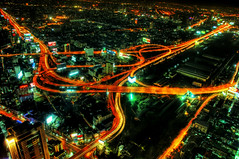
One Night in Bangkok... 
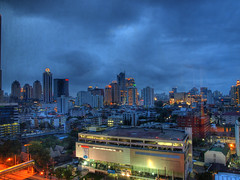
The city is one of contrasts, with its fast growing urban skyline and many old temples and historical sights. It is also growing increasingly cosmopolitan with high end shopping, entertainment and fine dining. Because of Thailand’s strict foreign ownership laws, apartments and condominiums are the option of choice for most international property seekers in Bangkok.

Saturday, July 3, 2010

Business Overview Thailand

P ThailandECONOMY. Thailand has a pro-business market economy driven by strong foreign investments and export oriented manufacturing especially in electronics, foods and automobiles. Thailand’s exports account for 60% of the country’s GDP. Thailand experienced strong economic growth prior to the Asian economic crisis of 1997 with GDP growth averaging 9.4% annually. However, the crisis adversely affected businesses in Thailand and saw the value of the Thai Baht decline by more than 50% against the US dollar. Since the crisis, the economy has grown on a growth path.
DEMOGRAPHY. Ethnic Thais account for 75% of Thailand’s 65 million population and another 11% are Chinese or Sino-Thais who have assimilated into the Thai culture or are from mixed marriages. Minorities include Malays who lived mainly in southern Thailand and account for 4% of the population.

 Others include the Mon, Lao, Khmers, Puan and Karen minorities and immigrants from India. Nearly 95% of the country’s population are Buddhists while Malays in Thailand are predominantly Muslims. Thai is the national language while languages used by the minorities include Malay, Isan and Khmer. Schools teach English but proficiency is low and generally, the educated elite are more proficient with the language.

Thailand Summer StormNearly 60% of Thailand’s workforce is involved in the agriculture industry but contributed to only 9.8% of the country’s GDP in 2004. The services industry contributed towards 46.1% of Thailand’s GDP and manufacturing 44.1% during the period. Major industries include tourism, electronics, textiles and garments, processed foods, beverages, agriculture produce, jewellery, furniture, plastics, vehicles and vehicle parts and mining of tungsten and tin. Major agriculture products include rice, tapioca, rubber, corn, sugarcane, coconuts, soybean and milk.

Thailand’s GDP was US$163.5 billion with a GDP per capita of US$2,537 in 2004. Thailand’s GDP grew by an average of 4.6% annually from 2000 to 2004 driven mainly by exports of high technology products mainly electronics. Inflation remained below 2.0% from 2000 to 2003 but increased to 2.8% by 2004. However, unemployment showed a declining trend from 3.6% in 2000 to 1.8% by 2004.


Garuda as national symbol of ThailandThe majority of the Thai population still live in the rural communities though the proportion of the urban population is increasing. Thailand’s urban population increased from 22% of the total population in 2000 to 31% by 2004. Thailand’s capital and major city Bangkok accounts for nearly 8% of the country’s total population. Other major cities include Nonthaburi, Pak Kret, Hat Yai, Nakhon Ratchasima, Chiang Mai and Udon Thani.

Thailand successfully reduced the poverty level from 27% in 1990 to 10% by 2004. The proportion of the population categorised belonging in the low-income household is estimated at 60% while middle and high-income households account for 30%. The average household income in Bangkok is twice than the national average.

The national flag of Kingdom of Thailand since...INTERNATIONAL TRADE. Thailand’s major trading partners include Japan, US, China, Hong Kong, Singapore, Malaysia and Taiwan. Main exports from Thailand include electronics, vehicle and vehicle parts, textiles, garments, footwear, seafood, processed foods, rice, rubber, jewellery, electrical appliances including computers. Main imports include machineries and equipments, raw materials and finished products, consumer goods and fuels.
  
INFRASTRUCTURE. Telecommunication services to the general public are overall adequate. Internet broadband services are mostly concentrated in Bangkok. Cities and towns are well connected by roads but lacks super highways connecting Thailand’s cities and major towns. Cities the major towns are served by airports and well connected by buses and rail system.
Smart consumers save money with CONSUMER REPOR...

CONSUMER USAGE OF TECHNOLOGY. There were nearly 17.3 million installed fixed-line telephones in 2004 giving a penetration of 40% of all Thai homes installed with telephones.

The penetration of mobile phones increased from just 7% of the population in 2001 to 42% or 27 million mobile phones by 2004. The penetration of computers is still low but increased from 5.1% of the households in 2001 to nearly 12% by 2004. The number of internet users reached an estimated 8 million in 2004 but most of the internet users are concentrated in Bangkok and the major cities and towns. The penetration of television in homes in 93% indicating many low-income homes have televisions.
Thai 1 Baht coin 
RETAIL MARKET. The retail industry in Thailand totalled an estimated US$24.5 billion in 2004. There are nearly 300,000 traditional “mom and pop” stores in Thailand accounting for 65% of the total retail sales. However, there are 4,500 modern retail establishments (hypermarkets, supermarkets, department stores and convenience stores) accounting for 35% of the total retail sales. Most of the modern retail establishments are located in Bangkok. Shopping in modern retail establishments is increasingly popular and more establishments expected in the near future.

A breakfast in the Isaan region of Thailand, s...FOOD CULTURE. Rice is the staple food but while those in central and southern Thailand prefer white fragrant rice those in northern Thailand prefer the glutinous variety. Thai dishes are generally hot and spicy but foods from the northern region are generally milder.

Thais are less adapting to western foods even if they could afford it compared to consumers in Singapore and Malaysia. However, bakery and coffer shop chains are gaining popularity among young professionals who have adapted to western culture.


Recommended Links
Best Bilateral Networks: Thailand and Australia

Wednesday, June 30, 2010

Thailand has a clean bill when it comes to Medical at Bumrungrad

Hospitals around the world are drawing new patients with top-notch doctors, high-tech equipment and low costs. These 10 are leaders in their field.
It’s not a stretch to call Jamie Johnson an accidental tourist in Thailand. While touring with a Christian singing group, Johnson, a diabetic from the United States, developed an infection in her ankle that shut down her kidneys. She was evacuated by airplane from Malaysia to Bumrungrad International Hospital in Bangkok – a facility she had never heard of in a country she had never been to and in a city she had associated with a sex shows in beer bars. “My husband back home was thinking, ‘She’s going to be in a straw hut’,” she says.

Johnson, though, was lucky enough to land in Asia’s first internationally accredited hospital and one of the most modern and efficient medical facilities in the world. Last year the hospital treated 400,000 foreign patients – the highest of any hospital in the world – from more than 150 countries, for everything from heart disease to hip replacements to breast implants. The attraction: world-class medicine at developing-world prices. And patients get velvet-glove treatment redolent of a five-star hotel. “We deliver the one thing that people want in health care but don’t expect to get – service,” says Ruben Toral, the hospitals marketing director.


As medical costs skyrocket – Americans spent 16 percent of GDP on health care last year, according to the OECD, and Europeans aren’t far behind – the idea of going abroad to get healthy is becoming more and more attractive. More than 150,000 North Americans and Europeans currently seek medical treatment overseas each year, estimates Josef Woodman, author of the forthcoming “Patients without Borders.” For invasive surgeries, preferred destinations include India, Thailand, Singapore and Malaysia. Large hospitals, such as Bumrungrad and the Apollo chain in India, actively court American, European and Middle Eastern patients.

Slick web sites tout their partnerships with nearby luxury hotels for post-op recovery. Bumrungrad arranges limousines to pick up patients at the airport, and sheiks and princes congregate in the Platinum Lounge of Apollo’s Delhi hospital. Abacas International, a leading travel facilitator, reports that medical tourism to Asia could generate up to $4.4 billion by 2012.

Businesses are taking notice. At least 40 corporations have signed on to the overseas plan that United Group Programs, a health insurer in Boca Raton, Florida, began offering over six months ago. Sending an employee abroad can save 80 percent of the costs of a procedure; a $50,000 angioplasty in the United States costs less than $6000 in Mohali, India according to GlobalChoice Healthcare, a firm that arranges foreign medical procedures.
Bumrungrad officials insist that foreigners come not just for the cheap bills and luxury accommodations. The hospital’s doctors, they say, have been trained at the best Western medical schools and use the most advanced medical equipment. And the service is eye-opening for patients accustomed to public clinics. Walk-in patients see a specialist in 17 minutes on average. Since 75 percent of hospital revenues are paid by patients directly, health and insurance companies have no say in treatment. Low labour costs allow Thai hospitals to employ more staff.

Wednesday, June 16, 2010

The Generation of Spenders

My generation was parented by the Menders so I became a Minder, today I see the young generation as "Spenders".. there are so many that have or at least expect every single consumer item known to mankind?

So do we... "MYOB" (mind your own business) or do we throw a life line.  Give them a hand to break the cycle of spending money like there’s no tomorrow.  Buying them “The Barefoot Investor: 5 Steps to Financial Freedom” by Scott Pape.. a book written by someone from their Generation!.